
Table of Contents
As an Amazon Associate we earn from qualifying purchases. This does not change the price you pay.
Every snowmobiler eventually faces the same choice: buy a separate jacket and pants (or bibs), or go with a one-piece suit. Both keep riders warm and dry when they are built well, but they behave very differently on the trail, in the shop and in the lodge at lunch. The right answer depends on the kind of riding, the climate and how much flexibility is needed off the sled.
This guide compares the two systems point by point and explains which riders are better served by each. For specific product recommendations, see the roundups of the best snowmobile jackets, best snowmobile pants and bibs and best one-piece snowmobile suits.
Quick comparison
| Factor | Jacket + pants/bibs | One-piece suit |
|---|---|---|
| Warmth and sealing | Very good with bibs and a powder skirt | Excellent, no gap at the waist |
| Versatility | High: pieces work for skiing, shoveling and town | Low: built for riding |
| Temperature control | Easy: remove the jacket at stops | Limited to vents and zippers |
| Fit | Top and bottom sized separately | Must suit both torso and legs |
| Getting dressed | Two steps, simple | One step, but awkward bathroom breaks |
| Best for | Mountain, backcountry and mixed use | Trail riding in very cold, windy country |
How a one-piece suit works
A one-piece snowmobile suit is a single insulated shell that covers the body from the neck to the ankles. Because there is no join at the waist, there is nowhere for snow or wind to sneak in when the rider leans forward, sits low on the seat or falls in deep snow. Most suits use a long diagonal or double front zipper, an insulated collar, and boot gaiters that pull over the top of snowmobile boots.
That sealed design is the reason one-piece suits remain popular with trail riders in the coldest regions. At highway-like trail speeds the wind chill is brutal, and a suit traps a continuous layer of warm air around the whole body. Many riders also like the simplicity: one garment, one zipper, and no fiddling with suspenders or powder skirts.
How a jacket and pants or bibs system works
A two-piece system pairs a snowmobile jacket with insulated pants or, more commonly, bibs that rise to the chest and are held by suspenders. The jacket overlaps the bib, and better jackets add an internal powder skirt that snaps around the waist to block snow.
Modern snowmobile jackets and bibs come in insulated and shell versions. Shells have no insulation and rely on the layers underneath, which suits active mountain riding where the body produces a lot of heat. Insulated versions are closer to a suit in warmth, while still allowing the jacket to come off at stops or in the garage.
Warmth: which is warmer?
With equivalent insulation, a one-piece suit is generally warmer because there is no waist gap. The difference is small for riders who wear bibs and a jacket with a good powder skirt, but it becomes noticeable on long trail days in sub-zero temperatures, especially in strong wind.
A two-piece system makes it easier to fine-tune warmth, though. On a mild spring day the insulated jacket can be swapped for a shell, while the same bibs stay on. A suit is a single level of warmth, adjusted only with base layers and vents. The head-to-toe layering guide explains how to build those layers underneath.
Mobility and active riding
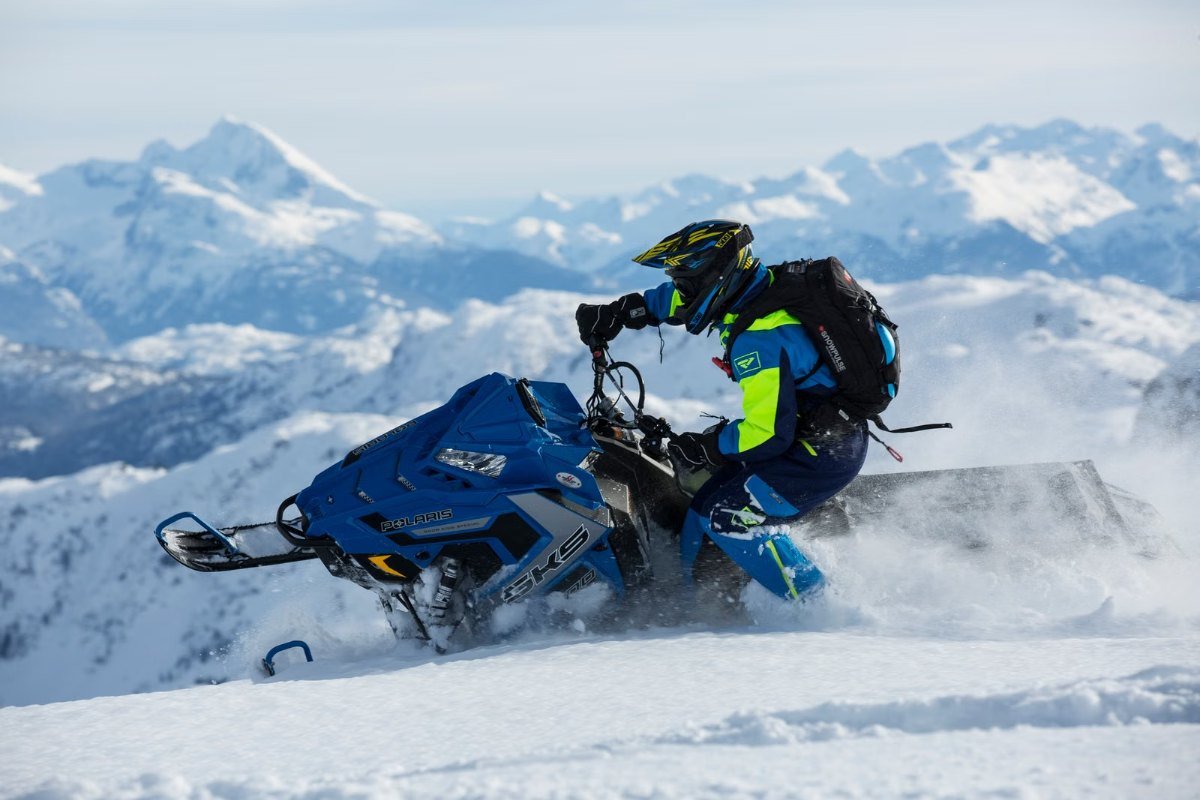
Mountain and backcountry riders stand, lean and move around the sled constantly. They also dig out stuck machines and hike short sections. For that style of riding, a shell jacket over breathable bibs is the clear favorite. It lets the upper body move freely, vents heat easily and avoids the restrictive feel that some suits have when the rider crouches or lifts a leg over the seat.
Trail riders spend most of the day seated, so freedom of movement matters less than protection from wind, which favors the suit.
Fit and sizing
Sizing is one of the most underrated differences. A one-piece suit has to fit the torso, arm length and inseam at the same time. Riders with a long torso and short legs, or the opposite, often struggle to find a suit that fits well everywhere. Women and taller riders in particular tend to find separates easier to fit.
With separates, the jacket and the bibs can be bought in different sizes and even from different brands, which also makes it easier to replace one worn piece without replacing the whole system.
Convenience off the sled
This is where the two-piece system wins clearly. At lunch stops, gas stations and in the lodge, the jacket comes off and the rider stays comfortable. With a suit, the choice is to stay fully dressed and overheat, or to peel the top half down and tie the sleeves around the waist. Bathroom breaks are also simpler with bibs, especially for women.
Separate pieces also get more use over the season. A good snowmobile jacket can double as a work coat for clearing snow, and bibs are useful for ice fishing and other cold-weather jobs.
Safety features to look for in either system
- Reflective details on the arms, back and legs for visibility on trails after dark.
- Bright colors or panels, which make it easier for others to spot a rider in an emergency.
- Waterproof, breathable membrane to keep riders dry when snow melts on the shell and when sweating.
- Flotation: some suits and jackets include buoyancy panels for riders who cross frozen lakes and rivers. These are worth considering wherever ice crossings are common.
- Reinforced knees and seat to resist wear from the sled and from kneeling in snow.
- Avalanche gear compatibility: mountain riders should check that jackets and bibs have room and pockets for a transceiver harness.
Which one should be chosen?
Choose a one-piece suit if
- Most riding is on groomed trails in very cold or windy conditions.
- Maximum warmth and a sealed waist matter more than flexibility.
- The suit will be used only for snowmobiling.
- The rider fits a standard size well.
See the current picks in the best one-piece snowmobile suits roundup.
Choose a jacket and bibs if
- Riding includes mountains, deep powder or the backcountry.
- Temperatures vary through the season.
- The clothing will also be used for other winter activities.
- The rider needs different sizes on top and bottom.
Start with the best snowmobile jackets and match them with a pair from the best snowmobile pants and bibs list.
Do not forget the extremities
Whichever system is chosen, warm hands, feet and eyes make the biggest difference to comfort. Insulated snowmobile boots that fit under the suit or bib gaiters, a pair of snowmobile gloves (heated models are popular for trail riding), and anti-fog snowmobile goggles complete the outfit.
Conclusion
A one-piece suit is the warmest, simplest option for trail riders in harsh cold. A jacket and bibs system is more versatile, easier to fit and better for active mountain and backcountry riding. Many experienced riders end up owning both: a suit for the coldest trail days and separates for everything else. For anyone buying their first set, separates are usually the safer bet because they adapt to more situations and get more use over the winter.


